A mathematician is a device for turning coffee into theorems – Alfréd Rényi
One of the notable limitations of a standard autoregressive model is that it intrinsically assumes distributive homogeneity across the historical time horizon. A system’s impulse response to a change in the value of a shock term,  , at some time-step,
  , must also account for influences imposed by external systems evolving in parallel – specially if there exist a correlation known to be of particular significance. These nuanced characteristics of real-world scenarios further complicate an autoregressive model’s broad application as a time-varying forecast. This new series explores mathematical machinery borrowed from Itô calculus as a means to derive a systematic solution to an n-state autoregressive model where significant correlation exists between two interacting time-varying processes with underlying random components.
Imagine a singular stationary point in a closed system. An infinitesimally small region containing within it maximum information in a state of equiprobability. In a state of such rigid order the propensity for information mobility is minimized. Now consider allowing this system to interact with another time-varying process. The structural stability of our information space due to volatility from information gain, deteriorates as its entropy increases. This process is accelerated as our system evolves forward in time.
Suppose that the entropic state for the subset of initial information  , observed at time
  , is bound by the preceding entropic state at time
  . Therefore, in the case of discrete intervals we have


where  is a scale parameter and
  represents white noise. Rearranging the terms in (1) we can show


This result derives from the fact that the first difference of a random walk forms a purely random process. The analogous interpretation of (2) in continuous time can be described by the general form


This expression is what is commonly called a first-order continuous autoregressive equation CAR(1). A CAR process of order  is generally represented by the following equation


Note that  represents a continuous white noise process which cannot physically exist. We will instead replace this term with one that represents small infinitesimal changes characterized by Gaussian orthogonal increments. That is to say that for any two non-overlapping time intervals
  and
and  the increments
  are independent of past values
  . Furthermore,
  is always zero.
  is described as pure a Wiener process. We will rewrite (3) in its first-order stochastic differential form


where and  are more formally referred to as drift and volatility. Expression (5) appears in the well known Ornstein-Uhlenbeck model. It is, however, an incomplete characterization of our particular chaotic system. This is because our information space is no longer a closed system, rather one that is interacting with another chaotic system with a systematic influence on the state variable
  . As a result of this, the variability of distribution throughout time is no longer constant. Our system is said to be heteroskedastic. In order to account for this non-linearity we can relax orthogonality by introducing a function
  that describes the relationship between these interacting systems


Let us define a  that is some linear combination of our closed system,
  , and the outside system,
  . We can formalize this interpretation by writing out the total differential form


which can be re-written as


Now lets assume that


which implies


where  . For
. For  the above expression reduces to


assuming zero constants of integration and where  and
and  are independent
  . Based on this we can define the following


where  and
and  describes the interaction between stochastic systems
  and
and  . Solving for and we have


Therefore, it follows
![{\displaystyle \begin{aligned} \tilde{W}(z_i, z_j) & = \frac {1}{2} [\frac {1}{\sigma_i} \, W^{\{i\},2}_t + (\frac {\sigma_i W^{\{j\}}_t - \rho \sigma_j W^{\{i\}}_t}{\sigma_i \sigma_j \sqrt{1 - \rho^2}})^2] \\ & = - \frac {1}{2(1 - \rho^2)} [\frac {W^{\{i\},2}_t}{\sigma_i^2} + \frac{W^{\{j\},2}_t}{\sigma_j^2} - 2 \rho \frac {W^{\{i\}}_t W^{\{j\}}_t}{\sigma_i \sigma_j}] \end{aligned} }](https://s0.wp.com/latex.php?latex=%7B%5Cdisplaystyle+%5Cbegin%7Baligned%7D+++++%5Ctilde%7BW%7D%28z_i%2C+z_j%29+%26+%3D+%5Cfrac+%7B1%7D%7B2%7D+%5B%5Cfrac+%7B1%7D%7B%5Csigma_i%7D+%5C%2C+W%5E%7B%5C%7Bi%5C%7D%2C2%7D_t+%2B+%28%5Cfrac+%7B%5Csigma_i+W%5E%7B%5C%7Bj%5C%7D%7D_t+-+%5Crho+%5Csigma_j+W%5E%7B%5C%7Bi%5C%7D%7D_t%7D%7B%5Csigma_i+%5Csigma_j+%5Csqrt%7B1+-+%5Crho%5E2%7D%7D%29%5E2%5D+%5C%5C+++++%26+%3D+-+%5Cfrac+%7B1%7D%7B2%281+-+%5Crho%5E2%29%7D+%5B%5Cfrac+%7BW%5E%7B%5C%7Bi%5C%7D%2C2%7D_t%7D%7B%5Csigma_i%5E2%7D+%2B+%5Cfrac%7BW%5E%7B%5C%7Bj%5C%7D%2C2%7D_t%7D%7B%5Csigma_j%5E2%7D+-+2+%5Crho+%5Cfrac+%7BW%5E%7B%5C%7Bi%5C%7D%7D_t+W%5E%7B%5C%7Bj%5C%7D%7D_t%7D%7B%5Csigma_i+%5Csigma_j%7D%5D+%5Cend%7Baligned%7D+%7D&bg=ffffff&fg=404040&s=0&c=20201002)

Given the result above, we can re-write (6)


In the next chapter we will outline the steps that solve for , extending these results to derive an n-state CAR framework.

![{\displaystyle \sum_ {i = 1}^{n} \sum_ {j = 1}^{n} \Sigma^{-1}_{ij} \begin{cases} W_t^{\{i\}, 2} \frac {e^{\alpha_{ii} t}}{\alpha_{ii}} - \frac {2}{\alpha_{ii}} \int_0^t W_s^{\{i\}} e^{\alpha_{ii} s} \, dW_s^{\{i\}} + \frac {1 - e^{\alpha_{ii} t}}{\alpha_{ii}^2}, & \text{if } i = j \\ \frac{1}{\alpha_{ij}} e^{\alpha_{ij} t} W_t^{\{i\}} W_t^{\{j\}} - \frac{1}{\alpha_{ij}} \int_0^t e^{\alpha_{ij} s} \left[ W_s^{\{i\}}\, dW_s^{\{j\}} + W_s^{\{j\}}\, dW_s^{\{i\}} \right] - \delta_{ij} \frac{e^{\alpha_{ij} t} - 1}{\alpha_{ij}^2}, & \text{if } i \ne j \end{cases} }](https://s0.wp.com/latex.php?latex=%7B%5Cdisplaystyle+%5Csum_+%7Bi+%3D+1%7D%5E%7Bn%7D+%5Csum_+%7Bj+%3D+1%7D%5E%7Bn%7D+%5CSigma%5E%7B-1%7D_%7Bij%7D+++++++++%5Cbegin%7Bcases%7D+++++++++++++W_t%5E%7B%5C%7Bi%5C%7D%2C+2%7D+%5Cfrac+%7Be%5E%7B%5Calpha_%7Bii%7D+t%7D%7D%7B%5Calpha_%7Bii%7D%7D+-+%5Cfrac+%7B2%7D%7B%5Calpha_%7Bii%7D%7D+%5Cint_0%5Et+W_s%5E%7B%5C%7Bi%5C%7D%7D+e%5E%7B%5Calpha_%7Bii%7D+s%7D+%5C%2C+dW_s%5E%7B%5C%7Bi%5C%7D%7D+%2B+%5Cfrac+%7B1+-+e%5E%7B%5Calpha_%7Bii%7D+t%7D%7D%7B%5Calpha_%7Bii%7D%5E2%7D%2C+%26+%5Ctext%7Bif+%7D+i+%3D+j+%5C%5C+++++++++++++%5Cfrac%7B1%7D%7B%5Calpha_%7Bij%7D%7D+e%5E%7B%5Calpha_%7Bij%7D+t%7D+W_t%5E%7B%5C%7Bi%5C%7D%7D+W_t%5E%7B%5C%7Bj%5C%7D%7D+-+%5Cfrac%7B1%7D%7B%5Calpha_%7Bij%7D%7D+%5Cint_0%5Et+e%5E%7B%5Calpha_%7Bij%7D+s%7D+%5Cleft%5B+W_s%5E%7B%5C%7Bi%5C%7D%7D%5C%2C+dW_s%5E%7B%5C%7Bj%5C%7D%7D+%2B+W_s%5E%7B%5C%7Bj%5C%7D%7D%5C%2C+dW_s%5E%7B%5C%7Bi%5C%7D%7D+%5Cright%5D+-+%5Cdelta_%7Bij%7D+%5Cfrac%7Be%5E%7B%5Calpha_%7Bij%7D+t%7D+-+1%7D%7B%5Calpha_%7Bij%7D%5E2%7D%2C+%26+%5Ctext%7Bif+%7D+i+%5Cne+j+++++++++%5Cend%7Bcases%7D+%7D&bg=ffffff&fg=404040&s=0&c=20201002)


![{\displaystyle \frac{e^{\alpha_{ij} t}}{\alpha_{ij}} \langle W_t^{\{i\}} W_t^{\{j\}} \rangle - \frac{1}{\alpha_{ij}} \int_0^t e^{\alpha_{ij} s} \left[ \langle W_s^{\{i\}} \rangle\, dW_s^{\{j\}} + \langle W_s^{\{j\}} \rangle\, dW_s^{\{i\}} \right] - \langle \delta_{ij} \frac{e^{\alpha_{ij} t} - 1}{\alpha_{ij}^2} \rangle }](https://s0.wp.com/latex.php?latex=%7B%5Cdisplaystyle+%5Cfrac%7Be%5E%7B%5Calpha_%7Bij%7D+t%7D%7D%7B%5Calpha_%7Bij%7D%7D+%5Clangle+W_t%5E%7B%5C%7Bi%5C%7D%7D+W_t%5E%7B%5C%7Bj%5C%7D%7D+%5Crangle+-+%5Cfrac%7B1%7D%7B%5Calpha_%7Bij%7D%7D+%5Cint_0%5Et+e%5E%7B%5Calpha_%7Bij%7D+s%7D+%5Cleft%5B+%5Clangle+W_s%5E%7B%5C%7Bi%5C%7D%7D+%5Crangle%5C%2C+dW_s%5E%7B%5C%7Bj%5C%7D%7D+%2B+%5Clangle+W_s%5E%7B%5C%7Bj%5C%7D%7D+%5Crangle%5C%2C+dW_s%5E%7B%5C%7Bi%5C%7D%7D+%5Cright%5D+-+%5Clangle+%5Cdelta_%7Bij%7D+%5Cfrac%7Be%5E%7B%5Calpha_%7Bij%7D+t%7D+-+1%7D%7B%5Calpha_%7Bij%7D%5E2%7D+%5Crangle+%7D&bg=ffffff&fg=404040&s=0&c=20201002)


 rather than a time-varying correlation matrix reflects a deliberate trade-off between expressive power and analytical tractability. The function


 is a linear combination of two Wiener processes:

 , the resulting process is no longer a Levy process in the strict sense. The introduction of
  described in Chapter II, which can be thought of as a type of memory function, arise from its intrinsic dependence on past values of
  , our model may satisfy one of two conditions:
 condition:
![{\displaystyle \mathbb{E}[|Z_n|] < \infty, \quad \mathbb{E}[Z_n | Z_{n-1}, Z_{n-2}, \dots, Z_1] \geq Z_{n-1}, \quad n \geq 1, \nonumber }](https://s0.wp.com/latex.php?latex=%7B%5Cdisplaystyle+%5Cmathbb%7BE%7D%5B%7CZ_n%7C%5D+%3C+%5Cinfty%2C+%5Cquad+%5Cmathbb%7BE%7D%5BZ_n+%7C+Z_%7Bn-1%7D%2C+Z_%7Bn-2%7D%2C+%5Cdots%2C+Z_1%5D+%5Cgeq+Z_%7Bn-1%7D%2C+%5Cquad+n+%5Cgeq+1%2C+%5Cnonumber+%7D&bg=ffffff&fg=404040&s=0&c=20201002)
 condition:
![{\displaystyle \mathbb{E}[|Z_n|] < \infty, \quad \mathbb{E}[Z_n | Z_{n-1}, Z_{n-2}, \dots, Z_1] \leq Z_{n-1}, \quad n \geq 1. \nonumber }](https://s0.wp.com/latex.php?latex=%7B%5Cdisplaystyle+%5Cmathbb%7BE%7D%5B%7CZ_n%7C%5D+%3C+%5Cinfty%2C+%5Cquad+%5Cmathbb%7BE%7D%5BZ_n+%7C+Z_%7Bn-1%7D%2C+Z_%7Bn-2%7D%2C+%5Cdots%2C+Z_1%5D+%5Cleq+Z_%7Bn-1%7D%2C+%5Cquad+n+%5Cgeq+1.+%5Cnonumber+%7D&bg=ffffff&fg=404040&s=0&c=20201002)
![{\displaystyle \begin{aligned} \mathsf{E} [|Z_n|]<\infty; \quad \mathsf{E}[Z_n|Z_{n-1},Z_{n-2},...,Z_1] \geq Z_{n-1} ;\quad n \geq 1 \nonumber \end{aligned} }](https://s0.wp.com/latex.php?latex=%7B%5Cdisplaystyle+%5Cbegin%7Baligned%7D+++++++++%5Cmathsf%7BE%7D+%5B%7CZ_n%7C%5D%3C%5Cinfty%3B+%5Cquad+%5Cmathsf%7BE%7D%5BZ_n%7CZ_%7Bn-1%7D%2CZ_%7Bn-2%7D%2C...%2CZ_1%5D+%5Cgeq+Z_%7Bn-1%7D+%3B%5Cquad+n+%5Cgeq+1++%5Cnonumber+++++%5Cend%7Baligned%7D+%7D&bg=ffffff&fg=404040&s=0&c=20201002)

![{\displaystyle \begin{aligned} \mathsf{E}[|Z_n|] <\infty; \quad \mathsf{E}[Z_n|Z_{n-1},Z_{n-1},...,Z_1]\leq Z_{n-1};\quad n \geq 1 \nonumber \end{aligned} }](https://s0.wp.com/latex.php?latex=%7B%5Cdisplaystyle+%5Cbegin%7Baligned%7D+++++++++%5Cmathsf%7BE%7D%5B%7CZ_n%7C%5D+%3C%5Cinfty%3B+%5Cquad+%5Cmathsf%7BE%7D%5BZ_n%7CZ_%7Bn-1%7D%2CZ_%7Bn-1%7D%2C...%2CZ_1%5D%5Cleq+Z_%7Bn-1%7D%3B%5Cquad+n+%5Cgeq+1++%5Cnonumber+++++%5Cend%7Baligned%7D+%7D&bg=ffffff&fg=404040&s=0&c=20201002)


 .
.

![{\displaystyle \begin{aligned} f(t, W_t^{i}) - f(0, 0) & = \frac {1}{\alpha_{ii}} [W_s^{\{i\}, 2} e^{\alpha_{ii} s}]_{0}^{t} \\ \int_0^t \frac{\partial f}{\partial t}(s,W_s^{\{i\}}) \, ds & = \int_0^t W_s^{\{i\}, 2} e^{\alpha_{ii} s} \, ds \\ \int_0^t \frac{\partial f}{\partial x}(s,W_s^{\{i\}}) \, dW_s^{\{i\}} & = \frac {2}{\alpha_{ii}} \int_0^t W_s^{\{i\}} \, e^{\alpha_{ii} s} \, dW_s^{\{i\}} \\ \frac{1}{2}\int_0^t \frac{\partial^2 f}{\partial x^2}(s,W_s^{\{i\}}) \, ds & = \frac {1}{\alpha_{ii}} \int_0^t e^{\alpha_{ii} s} \, d_s \end{aligned} }](https://s0.wp.com/latex.php?latex=%7B%5Cdisplaystyle+%5Cbegin%7Baligned%7D+f%28t%2C+W_t%5E%7Bi%7D%29+-+f%280%2C+0%29+%26+%3D+%5Cfrac+%7B1%7D%7B%5Calpha_%7Bii%7D%7D+%5BW_s%5E%7B%5C%7Bi%5C%7D%2C+2%7D+e%5E%7B%5Calpha_%7Bii%7D+s%7D%5D_%7B0%7D%5E%7Bt%7D+%5C%5C+%5Cint_0%5Et+%5Cfrac%7B%5Cpartial+f%7D%7B%5Cpartial+t%7D%28s%2CW_s%5E%7B%5C%7Bi%5C%7D%7D%29+%5C%2C+ds+%26+%3D+%5Cint_0%5Et+W_s%5E%7B%5C%7Bi%5C%7D%2C+2%7D+e%5E%7B%5Calpha_%7Bii%7D+s%7D+%5C%2C+ds+%5C%5C+%5Cint_0%5Et+%5Cfrac%7B%5Cpartial+f%7D%7B%5Cpartial+x%7D%28s%2CW_s%5E%7B%5C%7Bi%5C%7D%7D%29+%5C%2C+dW_s%5E%7B%5C%7Bi%5C%7D%7D+%26+%3D+%5Cfrac+%7B2%7D%7B%5Calpha_%7Bii%7D%7D+%5Cint_0%5Et+W_s%5E%7B%5C%7Bi%5C%7D%7D+%5C%2C+e%5E%7B%5Calpha_%7Bii%7D+s%7D+%5C%2C+dW_s%5E%7B%5C%7Bi%5C%7D%7D+%5C%5C+%5Cfrac%7B1%7D%7B2%7D%5Cint_0%5Et+%5Cfrac%7B%5Cpartial%5E2+f%7D%7B%5Cpartial+x%5E2%7D%28s%2CW_s%5E%7B%5C%7Bi%5C%7D%7D%29+%5C%2C+ds+%26+%3D+%5Cfrac+%7B1%7D%7B%5Calpha_%7Bii%7D%7D+%5Cint_0%5Et+e%5E%7B%5Calpha_%7Bii%7D+s%7D+%5C%2C+d_s+%5Cend%7Baligned%7D+%7D&bg=ffffff&fg=404040&s=0&c=20201002)


![{\displaystyle d(xy)_{t} = x_{t}dy_{t} + y_{t}dx_{t} + dx_{t}dy_{t}, \quad dx_{t}dy_{t} = d[x,y]_{t} }](https://s0.wp.com/latex.php?latex=%7B%5Cdisplaystyle+d%28xy%29_%7Bt%7D+%3D+x_%7Bt%7Ddy_%7Bt%7D+%2B+y_%7Bt%7Ddx_%7Bt%7D+%2B+dx_%7Bt%7Ddy_%7Bt%7D%2C+%5Cquad+dx_%7Bt%7Ddy_%7Bt%7D+%3D+d%5Bx%2Cy%5D_%7Bt%7D+%7D&bg=ffffff&fg=404040&s=0&c=20201002)

![[x,y]_{t}](https://s0.wp.com/latex.php?latex=%5Bx%2Cy%5D_%7Bt%7D&bg=ffffff&fg=404040&s=0&c=20201002) underpins a critical difference between classical calculus and stochastic calculus. This topic is quite involved and, for the sake of brevity, will be skipped in this chapter. I plan to return to it in the future with a comprehensive overview. Continuing on, we know that using Itô’s multiplication table we can deduce that
underpins a critical difference between classical calculus and stochastic calculus. This topic is quite involved and, for the sake of brevity, will be skipped in this chapter. I plan to return to it in the future with a comprehensive overview. Continuing on, we know that using Itô’s multiplication table we can deduce that  , where
  is the Kronecker delta and where
  when
when 


![{\displaystyle \begin{aligned} dY_s & = \alpha_{ij} e^{\alpha_{ij} s} W_s^{\{i\}} W_s^{\{j\}}\, ds + e^{\alpha_{ij} s}\, d(W_s^{\{i\}} W_s^{\{j\}}) \\ & = \alpha_{ij} e^{\alpha_{ij} s} W_s^{\{i\}} W_s^{\{j\}}\, ds + e^{\alpha_{ij} s} \left[ W_s^{\{i\}}\, dW_s^{\{j\}} + W_s^{\{j\}}\, dW_s^{\{i\}} + \delta_{ij}\, ds \right] \end{aligned} }](https://s0.wp.com/latex.php?latex=%7B%5Cdisplaystyle+%5Cbegin%7Baligned%7D+++++++++dY_s+%26+%3D+%5Calpha_%7Bij%7D+e%5E%7B%5Calpha_%7Bij%7D+s%7D+W_s%5E%7B%5C%7Bi%5C%7D%7D+W_s%5E%7B%5C%7Bj%5C%7D%7D%5C%2C+ds+%2B+e%5E%7B%5Calpha_%7Bij%7D+s%7D%5C%2C+d%28W_s%5E%7B%5C%7Bi%5C%7D%7D+W_s%5E%7B%5C%7Bj%5C%7D%7D%29+%5C%5C+++++++++%26+%3D+%5Calpha_%7Bij%7D+e%5E%7B%5Calpha_%7Bij%7D+s%7D+W_s%5E%7B%5C%7Bi%5C%7D%7D+W_s%5E%7B%5C%7Bj%5C%7D%7D%5C%2C+ds+%2B+e%5E%7B%5Calpha_%7Bij%7D+s%7D+%5Cleft%5B+W_s%5E%7B%5C%7Bi%5C%7D%7D%5C%2C+dW_s%5E%7B%5C%7Bj%5C%7D%7D+%2B+W_s%5E%7B%5C%7Bj%5C%7D%7D%5C%2C+dW_s%5E%7B%5C%7Bi%5C%7D%7D+%2B+%5Cdelta_%7Bij%7D%5C%2C+ds+%5Cright%5D+++++%5Cend%7Baligned%7D+%7D&bg=ffffff&fg=404040&s=0&c=20201002)

![{\displaystyle Y_t = Y_0 + \int_0^t \alpha_{ij} e^{\alpha_{ij} s} W_s^{\{i\}} W_s^{\{j\}}\, ds + \int_0^t e^{\alpha_{ij} s} \left[ W_s^{\{i\}}\, dW_s^{\{j\}} + W_s^{\{j\}}\, dW_s^{\{i\}} \right] + \delta_{ij} \int_0^t e^{\alpha_{ij} s}\, ds }](https://s0.wp.com/latex.php?latex=%7B%5Cdisplaystyle+Y_t+%3D+Y_0+%2B+%5Cint_0%5Et+%5Calpha_%7Bij%7D+e%5E%7B%5Calpha_%7Bij%7D+s%7D+W_s%5E%7B%5C%7Bi%5C%7D%7D+W_s%5E%7B%5C%7Bj%5C%7D%7D%5C%2C+ds+%2B+%5Cint_0%5Et+e%5E%7B%5Calpha_%7Bij%7D+s%7D+%5Cleft%5B+W_s%5E%7B%5C%7Bi%5C%7D%7D%5C%2C+dW_s%5E%7B%5C%7Bj%5C%7D%7D+%2B+W_s%5E%7B%5C%7Bj%5C%7D%7D%5C%2C+dW_s%5E%7B%5C%7Bi%5C%7D%7D+%5Cright%5D+%2B+%5Cdelta_%7Bij%7D+%5Cint_0%5Et+e%5E%7B%5Calpha_%7Bij%7D+s%7D%5C%2C+ds+%7D&bg=ffffff&fg=404040&s=0&c=20201002)

 , we have
  , so:
, so:![{\displaystyle e^{\alpha_{ij} t} W_t^{\{i\}} W_t^{\{j\}} = \alpha_{ij} \int_0^t e^{\alpha_{ij} s} W_s^{\{i\}} W_s^{\{j\}}\, ds + \int_0^t e^{\alpha_{ij} s} \left[ W_s^{\{i\}}\, dW_s^{\{j\}} + W_s^{\{j\}}\, dW_s^{\{i\}} \right] + \delta_{ij} \int_0^t e^{\alpha_{ij} s}\, ds }](https://s0.wp.com/latex.php?latex=%7B%5Cdisplaystyle+e%5E%7B%5Calpha_%7Bij%7D+t%7D+W_t%5E%7B%5C%7Bi%5C%7D%7D+W_t%5E%7B%5C%7Bj%5C%7D%7D+%3D+%5Calpha_%7Bij%7D+%5Cint_0%5Et+e%5E%7B%5Calpha_%7Bij%7D+s%7D+W_s%5E%7B%5C%7Bi%5C%7D%7D+W_s%5E%7B%5C%7Bj%5C%7D%7D%5C%2C+ds+%2B+%5Cint_0%5Et+e%5E%7B%5Calpha_%7Bij%7D+s%7D+%5Cleft%5B+W_s%5E%7B%5C%7Bi%5C%7D%7D%5C%2C+dW_s%5E%7B%5C%7Bj%5C%7D%7D+%2B+W_s%5E%7B%5C%7Bj%5C%7D%7D%5C%2C+dW_s%5E%7B%5C%7Bi%5C%7D%7D+%5Cright%5D+%2B+%5Cdelta_%7Bij%7D+%5Cint_0%5Et+e%5E%7B%5Calpha_%7Bij%7D+s%7D%5C%2C+ds+%7D&bg=ffffff&fg=404040&s=0&c=20201002)

 :
:![{\displaystyle \alpha I_t = e^{\alpha_{ij} t} W_t^{\{i\}} W_t^{\{j\}} - \int_0^t e^{\alpha_{ij} s} \left[ W_s^{\{i\}}\, dW_s^{\{j\}} + W_s^{\{j\}}\, dW_s^{\{i\}} \right] - \delta_{ij} \int_0^t e^{\alpha_{ij} s}\, ds }](https://s0.wp.com/latex.php?latex=%7B%5Cdisplaystyle+%5Calpha+I_t+%3D+e%5E%7B%5Calpha_%7Bij%7D+t%7D+W_t%5E%7B%5C%7Bi%5C%7D%7D+W_t%5E%7B%5C%7Bj%5C%7D%7D+-+%5Cint_0%5Et+e%5E%7B%5Calpha_%7Bij%7D+s%7D+%5Cleft%5B+W_s%5E%7B%5C%7Bi%5C%7D%7D%5C%2C+dW_s%5E%7B%5C%7Bj%5C%7D%7D+%2B+W_s%5E%7B%5C%7Bj%5C%7D%7D%5C%2C+dW_s%5E%7B%5C%7Bi%5C%7D%7D+%5Cright%5D+-+%5Cdelta_%7Bij%7D+%5Cint_0%5Et+e%5E%7B%5Calpha_%7Bij%7D+s%7D%5C%2C+ds+%7D&bg=ffffff&fg=404040&s=0&c=20201002)

 , we can isolate
  :
:![{\displaystyle I_t = \frac{1}{\alpha_{ij}} e^{\alpha_{ij} t} W_t^{\{i\}} W_t^{\{j\}} - \frac{1}{\alpha_{ij}} \int_0^t e^{\alpha_{ij}s} \left[ W_s^{\{i\}}\, dW_s^{\{j\}} + W_s^{\{j\}}\, dW_s^{\{i\}} \right] - \frac{\delta_{ij}}{\alpha_{ij}} \int_0^t e^{\alpha_{ij} s}\, ds }](https://s0.wp.com/latex.php?latex=%7B%5Cdisplaystyle+I_t+%3D+%5Cfrac%7B1%7D%7B%5Calpha_%7Bij%7D%7D+e%5E%7B%5Calpha_%7Bij%7D+t%7D+W_t%5E%7B%5C%7Bi%5C%7D%7D+W_t%5E%7B%5C%7Bj%5C%7D%7D+-+%5Cfrac%7B1%7D%7B%5Calpha_%7Bij%7D%7D+%5Cint_0%5Et+e%5E%7B%5Calpha_%7Bij%7Ds%7D+%5Cleft%5B+W_s%5E%7B%5C%7Bi%5C%7D%7D%5C%2C+dW_s%5E%7B%5C%7Bj%5C%7D%7D+%2B+W_s%5E%7B%5C%7Bj%5C%7D%7D%5C%2C+dW_s%5E%7B%5C%7Bi%5C%7D%7D+%5Cright%5D+-+%5Cfrac%7B%5Cdelta_%7Bij%7D%7D%7B%5Calpha_%7Bij%7D%7D+%5Cint_0%5Et+e%5E%7B%5Calpha_%7Bij%7D+s%7D%5C%2C+ds+%7D&bg=ffffff&fg=404040&s=0&c=20201002)

 , we can also write:
![{\displaystyle \int_0^t e^{\alpha_{ij} s} W_s^{\{i\}} W_s^{\{j\}}\, ds = \frac{1}{\alpha_{ij}} e^{\alpha_{ij} t} W_t^{\{i\}} W_t^{\{j\}} - \frac{1}{\alpha_{ij}} \int_0^t e^{\alpha_{ij} s} \left[ W_s^{\{i\}}\, dW_s^{\{j\}} + W_s^{\{j\}}\, dW_s^{\{i\}} \right] - \delta_{ij} \frac{e^{\alpha_{ij} t} - 1}{\alpha_{ij}^2} }](https://s0.wp.com/latex.php?latex=%7B%5Cdisplaystyle+%5Cint_0%5Et+e%5E%7B%5Calpha_%7Bij%7D+s%7D+W_s%5E%7B%5C%7Bi%5C%7D%7D+W_s%5E%7B%5C%7Bj%5C%7D%7D%5C%2C+ds+%3D+%5Cfrac%7B1%7D%7B%5Calpha_%7Bij%7D%7D+e%5E%7B%5Calpha_%7Bij%7D+t%7D+W_t%5E%7B%5C%7Bi%5C%7D%7D+W_t%5E%7B%5C%7Bj%5C%7D%7D+-+%5Cfrac%7B1%7D%7B%5Calpha_%7Bij%7D%7D+%5Cint_0%5Et+e%5E%7B%5Calpha_%7Bij%7D+s%7D+%5Cleft%5B+W_s%5E%7B%5C%7Bi%5C%7D%7D%5C%2C+dW_s%5E%7B%5C%7Bj%5C%7D%7D+%2B+W_s%5E%7B%5C%7Bj%5C%7D%7D%5C%2C+dW_s%5E%7B%5C%7Bi%5C%7D%7D+%5Cright%5D+-+%5Cdelta_%7Bij%7D+%5Cfrac%7Be%5E%7B%5Calpha_%7Bij%7D+t%7D+-+1%7D%7B%5Calpha_%7Bij%7D%5E2%7D+%7D&bg=ffffff&fg=404040&s=0&c=20201002)

 and
and  expressed in terms of standard normal variables
  and
and  . Using the Cholesky decomposition of a covariance matrix
  :
:


 we get:


 , to account for the rate at which our stochastic process changes with time


 is an upper triangle matrix:


![{\displaystyle e^{-\int_ {\:}^{t} P(t) \, dt} \left[ {\int_ {\:}^{t} e^{\int_ {\:}^{\lambda} P(\epsilon) \, d\epsilon} Q(\lambda)\, d\lambda} + t_0 \right] }](https://s0.wp.com/latex.php?latex=%7B%5Cdisplaystyle+e%5E%7B-%5Cint_+%7B%5C%3A%7D%5E%7Bt%7D+P%28t%29+%5C%2C+dt%7D+%5Cleft%5B+%7B%5Cint_+%7B%5C%3A%7D%5E%7Bt%7D+e%5E%7B%5Cint_+%7B%5C%3A%7D%5E%7B%5Clambda%7D+P%28%5Cepsilon%29+%5C%2C+d%5Cepsilon%7D+Q%28%5Clambda%29%5C%2C+d%5Clambda%7D+%2B+t_0+%5Cright%5D+%7D&bg=ffffff&fg=404040&s=0&c=20201002)

 is the integrating factor. Plugging (18) into our solution we have

 and identity matrix
  . The deterministic part of the (28) is rather trivial. In order to address the non-deterministic integrands, however, requires working knowledge of Itô Calculus. In the next chapter we will lay out the logic to make sense of these integrals.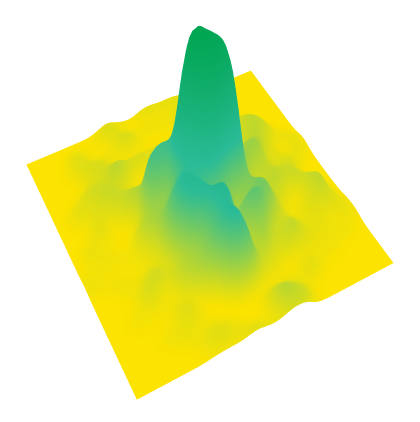
 that analytically continues the sum of the Dirichlet series


 from
from  to remove all factors of 2


 , where


 actually corresponds to the values of the Möbius function
  . Indeed, the reciprocal of the Zeta function can be formally defined by
 Order & Chaos