The nonlinear properties of  described in Chapter II, which can be thought of a type of memory function, arise from its intrinsic dependence on past values of
  . This means that for some integer-time stochastic process
  our model satisfies one of two relations: a Submartingale defined by
![{\displaystyle \begin{aligned} \mathsf{E} [|Z_n|]<\infty; \quad \mathsf{E}[Z_n|Z_{n-1},Z_{n-2},...,Z_1] \geq Z_{n-1} ;\quad n \geq 1 \nonumber \end{aligned} }](https://s0.wp.com/latex.php?latex=%7B%5Cdisplaystyle+%5Cbegin%7Baligned%7D+++++++++%5Cmathsf%7BE%7D+%5B%7CZ_n%7C%5D%3C%5Cinfty%3B+%5Cquad+%5Cmathsf%7BE%7D%5BZ_n%7CZ_%7Bn-1%7D%2CZ_%7Bn-2%7D%2C...%2CZ_1%5D+%5Cgeq+Z_%7Bn-1%7D+%3B%5Cquad+n+%5Cgeq+1++%5Cnonumber+++++%5Cend%7Baligned%7D+%7D&bg=ffffff&fg=404040&s=0&c=20201002)

or a Supermartinagle defined by
![{\displaystyle \begin{aligned} \mathsf{E}[|Z_n|] <\infty; \quad \mathsf{E}[Z_n|Z_{n-1},Z_{n-1},...,Z_1]\leq Z_{n-1};\quad n \geq 1 \nonumber \end{aligned} }](https://s0.wp.com/latex.php?latex=%7B%5Cdisplaystyle+%5Cbegin%7Baligned%7D+++++++++%5Cmathsf%7BE%7D%5B%7CZ_n%7C%5D+%3C%5Cinfty%3B+%5Cquad+%5Cmathsf%7BE%7D%5BZ_n%7CZ_%7Bn-1%7D%2CZ_%7Bn-1%7D%2C...%2CZ_1%5D%5Cleq+Z_%7Bn-1%7D%3B%5Cquad+n+%5Cgeq+1++%5Cnonumber+++++%5Cend%7Baligned%7D+%7D&bg=ffffff&fg=404040&s=0&c=20201002)

The focus of this chapter will be to explore the fundamental stochastic characteristics of (28) using the above defintions. To begin, it will help to re-write the integral using summation nation:


Note that when  we have
  .
.
In order to address these non-deterministic integrals in (31) we will need to apply Itô’s Lemma expressed as


For we have
![{\displaystyle \begin{aligned} f(t, W_t^{i}) - f(0, 0) & = \frac {1}{\alpha_{ii}} [W_s^{\{i\}, 2} e^{\alpha_{ii} s}]_{0}^{t} \\ \int_0^t \frac{\partial f}{\partial t}(s,W_s^{\{i\}}) \, ds & = \int_0^t W_s^{\{i\}, 2} e^{\alpha_{ii} s} \, ds \\ \int_0^t \frac{\partial f}{\partial x}(s,W_s^{\{i\}}) \, dW_s^{\{i\}} & = \frac {2}{\alpha_{ii}} \int_0^t W_s^{\{i\}} \, e^{\alpha_{ii} s} \, dW_s^{\{i\}} \\ \frac{1}{2}\int_0^t \frac{\partial^2 f}{\partial x^2}(s,W_s^{\{i\}}) \, ds & = \frac {1}{\alpha_{ii}} \int_0^t e^{\alpha_{ii} s} \, d_s \end{aligned} }](https://s0.wp.com/latex.php?latex=%7B%5Cdisplaystyle+%5Cbegin%7Baligned%7D+f%28t%2C+W_t%5E%7Bi%7D%29+-+f%280%2C+0%29+%26+%3D+%5Cfrac+%7B1%7D%7B%5Calpha_%7Bii%7D%7D+%5BW_s%5E%7B%5C%7Bi%5C%7D%2C+2%7D+e%5E%7B%5Calpha_%7Bii%7D+s%7D%5D_%7B0%7D%5E%7Bt%7D+%5C%5C+%5Cint_0%5Et+%5Cfrac%7B%5Cpartial+f%7D%7B%5Cpartial+t%7D%28s%2CW_s%5E%7B%5C%7Bi%5C%7D%7D%29+%5C%2C+ds+%26+%3D+%5Cint_0%5Et+W_s%5E%7B%5C%7Bi%5C%7D%2C+2%7D+e%5E%7B%5Calpha_%7Bii%7D+s%7D+%5C%2C+ds+%5C%5C+%5Cint_0%5Et+%5Cfrac%7B%5Cpartial+f%7D%7B%5Cpartial+x%7D%28s%2CW_s%5E%7B%5C%7Bi%5C%7D%7D%29+%5C%2C+dW_s%5E%7B%5C%7Bi%5C%7D%7D+%26+%3D+%5Cfrac+%7B2%7D%7B%5Calpha_%7Bii%7D%7D+%5Cint_0%5Et+W_s%5E%7B%5C%7Bi%5C%7D%7D+%5C%2C+e%5E%7B%5Calpha_%7Bii%7D+s%7D+%5C%2C+dW_s%5E%7B%5C%7Bi%5C%7D%7D+%5C%5C+%5Cfrac%7B1%7D%7B2%7D%5Cint_0%5Et+%5Cfrac%7B%5Cpartial%5E2+f%7D%7B%5Cpartial+x%5E2%7D%28s%2CW_s%5E%7B%5C%7Bi%5C%7D%7D%29+%5C%2C+ds+%26+%3D+%5Cfrac+%7B1%7D%7B%5Calpha_%7Bii%7D%7D+%5Cint_0%5Et+e%5E%7B%5Calpha_%7Bii%7D+s%7D+%5C%2C+d_s+%5Cend%7Baligned%7D+%7D&bg=ffffff&fg=404040&s=0&c=20201002)

which yields


The case  will require a little more mathematical machinery. The first step is to re-write the integral using Itô’s Differential:
![{\displaystyle d(xy)_{t} = x_{t}dy_{t} + y_{t}dx_{t} + dx_{t}dy_{t}, \quad dx_{t}dy_{t} = d[x,y]_{t} }](https://s0.wp.com/latex.php?latex=%7B%5Cdisplaystyle+d%28xy%29_%7Bt%7D+%3D+x_%7Bt%7Ddy_%7Bt%7D+%2B+y_%7Bt%7Ddx_%7Bt%7D+%2B+dx_%7Bt%7Ddy_%7Bt%7D%2C+%5Cquad+dx_%7Bt%7Ddy_%7Bt%7D+%3D+d%5Bx%2Cy%5D_%7Bt%7D+%7D&bg=ffffff&fg=404040&s=0&c=20201002)

The quadratic covariation denoted by ![[x,y]_{t}](https://s0.wp.com/latex.php?latex=%5Bx%2Cy%5D_%7Bt%7D&bg=ffffff&fg=404040&s=0&c=20201002) underpins a critical difference between classical calculus and stochastic calculus. This topic is quite involved and, for the sake of brevity, will be skipped in this chapter. I plan to return to it in the future with a comprehensive overview. Continuing on, we know that using Itô’s multiplication table we can deduce that
underpins a critical difference between classical calculus and stochastic calculus. This topic is quite involved and, for the sake of brevity, will be skipped in this chapter. I plan to return to it in the future with a comprehensive overview. Continuing on, we know that using Itô’s multiplication table we can deduce that  , where
  is the Kronecker delta and where
  when . The expression can then be re-written as


Applying Itô’s product rule to:


we can derive:
![{\displaystyle \begin{aligned} dY_s & = \alpha_{ij} e^{\alpha_{ij} s} W_s^{\{i\}} W_s^{\{j\}}\, ds + e^{\alpha_{ij} s}\, d(W_s^{\{i\}} W_s^{\{j\}}) \\ & = \alpha_{ij} e^{\alpha_{ij} s} W_s^{\{i\}} W_s^{\{j\}}\, ds + e^{\alpha_{ij} s} \left[ W_s^{\{i\}}\, dW_s^{\{j\}} + W_s^{\{j\}}\, dW_s^{\{i\}} + \delta_{ij}\, ds \right] \end{aligned} }](https://s0.wp.com/latex.php?latex=%7B%5Cdisplaystyle+%5Cbegin%7Baligned%7D+++++++++dY_s+%26+%3D+%5Calpha_%7Bij%7D+e%5E%7B%5Calpha_%7Bij%7D+s%7D+W_s%5E%7B%5C%7Bi%5C%7D%7D+W_s%5E%7B%5C%7Bj%5C%7D%7D%5C%2C+ds+%2B+e%5E%7B%5Calpha_%7Bij%7D+s%7D%5C%2C+d%28W_s%5E%7B%5C%7Bi%5C%7D%7D+W_s%5E%7B%5C%7Bj%5C%7D%7D%29+%5C%5C+++++++++%26+%3D+%5Calpha_%7Bij%7D+e%5E%7B%5Calpha_%7Bij%7D+s%7D+W_s%5E%7B%5C%7Bi%5C%7D%7D+W_s%5E%7B%5C%7Bj%5C%7D%7D%5C%2C+ds+%2B+e%5E%7B%5Calpha_%7Bij%7D+s%7D+%5Cleft%5B+W_s%5E%7B%5C%7Bi%5C%7D%7D%5C%2C+dW_s%5E%7B%5C%7Bj%5C%7D%7D+%2B+W_s%5E%7B%5C%7Bj%5C%7D%7D%5C%2C+dW_s%5E%7B%5C%7Bi%5C%7D%7D+%2B+%5Cdelta_%7Bij%7D%5C%2C+ds+%5Cright%5D+++++%5Cend%7Baligned%7D+%7D&bg=ffffff&fg=404040&s=0&c=20201002)

Integrating both sides in (36):
![{\displaystyle Y_t = Y_0 + \int_0^t \alpha_{ij} e^{\alpha_{ij} s} W_s^{\{i\}} W_s^{\{j\}}\, ds + \int_0^t e^{\alpha_{ij} s} \left[ W_s^{\{i\}}\, dW_s^{\{j\}} + W_s^{\{j\}}\, dW_s^{\{i\}} \right] + \delta_{ij} \int_0^t e^{\alpha_{ij} s}\, ds }](https://s0.wp.com/latex.php?latex=%7B%5Cdisplaystyle+Y_t+%3D+Y_0+%2B+%5Cint_0%5Et+%5Calpha_%7Bij%7D+e%5E%7B%5Calpha_%7Bij%7D+s%7D+W_s%5E%7B%5C%7Bi%5C%7D%7D+W_s%5E%7B%5C%7Bj%5C%7D%7D%5C%2C+ds+%2B+%5Cint_0%5Et+e%5E%7B%5Calpha_%7Bij%7D+s%7D+%5Cleft%5B+W_s%5E%7B%5C%7Bi%5C%7D%7D%5C%2C+dW_s%5E%7B%5C%7Bj%5C%7D%7D+%2B+W_s%5E%7B%5C%7Bj%5C%7D%7D%5C%2C+dW_s%5E%7B%5C%7Bi%5C%7D%7D+%5Cright%5D+%2B+%5Cdelta_%7Bij%7D+%5Cint_0%5Et+e%5E%7B%5Calpha_%7Bij%7D+s%7D%5C%2C+ds+%7D&bg=ffffff&fg=404040&s=0&c=20201002)

Since  , we have
  , so:
, so:
![{\displaystyle e^{\alpha_{ij} t} W_t^{\{i\}} W_t^{\{j\}} = \alpha_{ij} \int_0^t e^{\alpha_{ij} s} W_s^{\{i\}} W_s^{\{j\}}\, ds + \int_0^t e^{\alpha_{ij} s} \left[ W_s^{\{i\}}\, dW_s^{\{j\}} + W_s^{\{j\}}\, dW_s^{\{i\}} \right] + \delta_{ij} \int_0^t e^{\alpha_{ij} s}\, ds }](https://s0.wp.com/latex.php?latex=%7B%5Cdisplaystyle+e%5E%7B%5Calpha_%7Bij%7D+t%7D+W_t%5E%7B%5C%7Bi%5C%7D%7D+W_t%5E%7B%5C%7Bj%5C%7D%7D+%3D+%5Calpha_%7Bij%7D+%5Cint_0%5Et+e%5E%7B%5Calpha_%7Bij%7D+s%7D+W_s%5E%7B%5C%7Bi%5C%7D%7D+W_s%5E%7B%5C%7Bj%5C%7D%7D%5C%2C+ds+%2B+%5Cint_0%5Et+e%5E%7B%5Calpha_%7Bij%7D+s%7D+%5Cleft%5B+W_s%5E%7B%5C%7Bi%5C%7D%7D%5C%2C+dW_s%5E%7B%5C%7Bj%5C%7D%7D+%2B+W_s%5E%7B%5C%7Bj%5C%7D%7D%5C%2C+dW_s%5E%7B%5C%7Bi%5C%7D%7D+%5Cright%5D+%2B+%5Cdelta_%7Bij%7D+%5Cint_0%5Et+e%5E%7B%5Calpha_%7Bij%7D+s%7D%5C%2C+ds+%7D&bg=ffffff&fg=404040&s=0&c=20201002)

Rearranging (38) and solving for  :
:
![{\displaystyle \alpha I_t = e^{\alpha_{ij} t} W_t^{\{i\}} W_t^{\{j\}} - \int_0^t e^{\alpha_{ij} s} \left[ W_s^{\{i\}}\, dW_s^{\{j\}} + W_s^{\{j\}}\, dW_s^{\{i\}} \right] - \delta_{ij} \int_0^t e^{\alpha_{ij} s}\, ds }](https://s0.wp.com/latex.php?latex=%7B%5Cdisplaystyle+%5Calpha+I_t+%3D+e%5E%7B%5Calpha_%7Bij%7D+t%7D+W_t%5E%7B%5C%7Bi%5C%7D%7D+W_t%5E%7B%5C%7Bj%5C%7D%7D+-+%5Cint_0%5Et+e%5E%7B%5Calpha_%7Bij%7D+s%7D+%5Cleft%5B+W_s%5E%7B%5C%7Bi%5C%7D%7D%5C%2C+dW_s%5E%7B%5C%7Bj%5C%7D%7D+%2B+W_s%5E%7B%5C%7Bj%5C%7D%7D%5C%2C+dW_s%5E%7B%5C%7Bi%5C%7D%7D+%5Cright%5D+-+%5Cdelta_%7Bij%7D+%5Cint_0%5Et+e%5E%7B%5Calpha_%7Bij%7D+s%7D%5C%2C+ds+%7D&bg=ffffff&fg=404040&s=0&c=20201002)

Provided that  , we can isolate
  :
:
![{\displaystyle I_t = \frac{1}{\alpha_{ij}} e^{\alpha_{ij} t} W_t^{\{i\}} W_t^{\{j\}} - \frac{1}{\alpha_{ij}} \int_0^t e^{\alpha_{ij}s} \left[ W_s^{\{i\}}\, dW_s^{\{j\}} + W_s^{\{j\}}\, dW_s^{\{i\}} \right] - \frac{\delta_{ij}}{\alpha_{ij}} \int_0^t e^{\alpha_{ij} s}\, ds }](https://s0.wp.com/latex.php?latex=%7B%5Cdisplaystyle+I_t+%3D+%5Cfrac%7B1%7D%7B%5Calpha_%7Bij%7D%7D+e%5E%7B%5Calpha_%7Bij%7D+t%7D+W_t%5E%7B%5C%7Bi%5C%7D%7D+W_t%5E%7B%5C%7Bj%5C%7D%7D+-+%5Cfrac%7B1%7D%7B%5Calpha_%7Bij%7D%7D+%5Cint_0%5Et+e%5E%7B%5Calpha_%7Bij%7Ds%7D+%5Cleft%5B+W_s%5E%7B%5C%7Bi%5C%7D%7D%5C%2C+dW_s%5E%7B%5C%7Bj%5C%7D%7D+%2B+W_s%5E%7B%5C%7Bj%5C%7D%7D%5C%2C+dW_s%5E%7B%5C%7Bi%5C%7D%7D+%5Cright%5D+-+%5Cfrac%7B%5Cdelta_%7Bij%7D%7D%7B%5Calpha_%7Bij%7D%7D+%5Cint_0%5Et+e%5E%7B%5Calpha_%7Bij%7D+s%7D%5C%2C+ds+%7D&bg=ffffff&fg=404040&s=0&c=20201002)

Given that the closed form solution to  , we can also write:


Finally we have:
![{\displaystyle \int_0^t e^{\alpha_{ij} s} W_s^{\{i\}} W_s^{\{j\}}\, ds = \frac{1}{\alpha_{ij}} e^{\alpha_{ij} t} W_t^{\{i\}} W_t^{\{j\}} - \frac{1}{\alpha_{ij}} \int_0^t e^{\alpha_{ij} s} \left[ W_s^{\{i\}}\, dW_s^{\{j\}} + W_s^{\{j\}}\, dW_s^{\{i\}} \right] - \delta_{ij} \frac{e^{\alpha_{ij} t} - 1}{\alpha_{ij}^2} }](https://s0.wp.com/latex.php?latex=%7B%5Cdisplaystyle+%5Cint_0%5Et+e%5E%7B%5Calpha_%7Bij%7D+s%7D+W_s%5E%7B%5C%7Bi%5C%7D%7D+W_s%5E%7B%5C%7Bj%5C%7D%7D%5C%2C+ds+%3D+%5Cfrac%7B1%7D%7B%5Calpha_%7Bij%7D%7D+e%5E%7B%5Calpha_%7Bij%7D+t%7D+W_t%5E%7B%5C%7Bi%5C%7D%7D+W_t%5E%7B%5C%7Bj%5C%7D%7D+-+%5Cfrac%7B1%7D%7B%5Calpha_%7Bij%7D%7D+%5Cint_0%5Et+e%5E%7B%5Calpha_%7Bij%7D+s%7D+%5Cleft%5B+W_s%5E%7B%5C%7Bi%5C%7D%7D%5C%2C+dW_s%5E%7B%5C%7Bj%5C%7D%7D+%2B+W_s%5E%7B%5C%7Bj%5C%7D%7D%5C%2C+dW_s%5E%7B%5C%7Bi%5C%7D%7D+%5Cright%5D+-+%5Cdelta_%7Bij%7D+%5Cfrac%7Be%5E%7B%5Calpha_%7Bij%7D+t%7D+-+1%7D%7B%5Calpha_%7Bij%7D%5E2%7D+%7D&bg=ffffff&fg=404040&s=0&c=20201002)


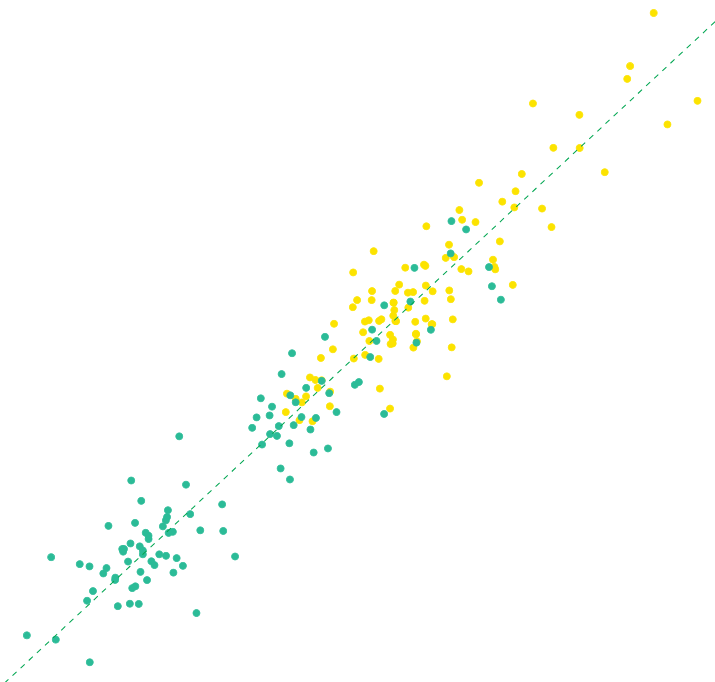
 Order & Chaos